What happens when the landscape that raised us begins to disappear?
For Chandan Singh, the village is not simply a geographical location. It is a living archive—a place where memory is embedded in soil, where knowledge travels through generations, and where everyday life is shaped by relationships between people, animals, crops, seasons, labour, and land. Born out of his lived experience in Bundelkhand and his present life in Chitrakoot, Singh’s paintings return repeatedly to this landscape, not as an idealised rural past, but as a terrain of memory, change, loss, and belonging.
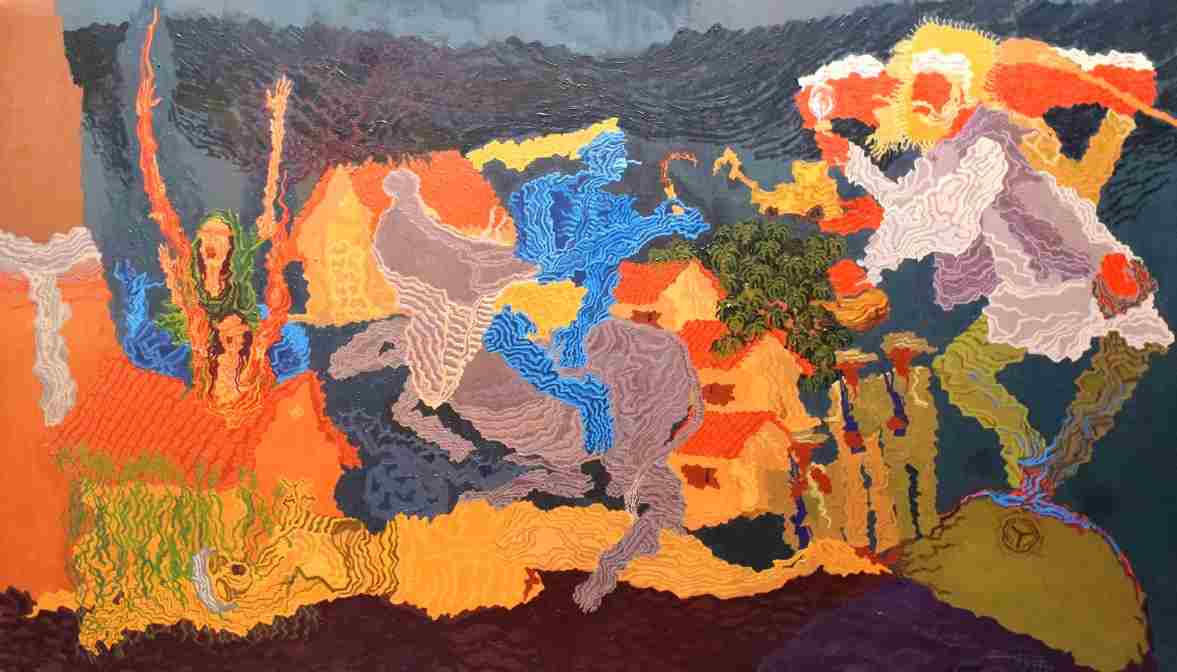
तोहरेगााँव मेंका बा ? (What’s in your village?), Acrylic on canvas, 45.6 x 54 in (left), 2023
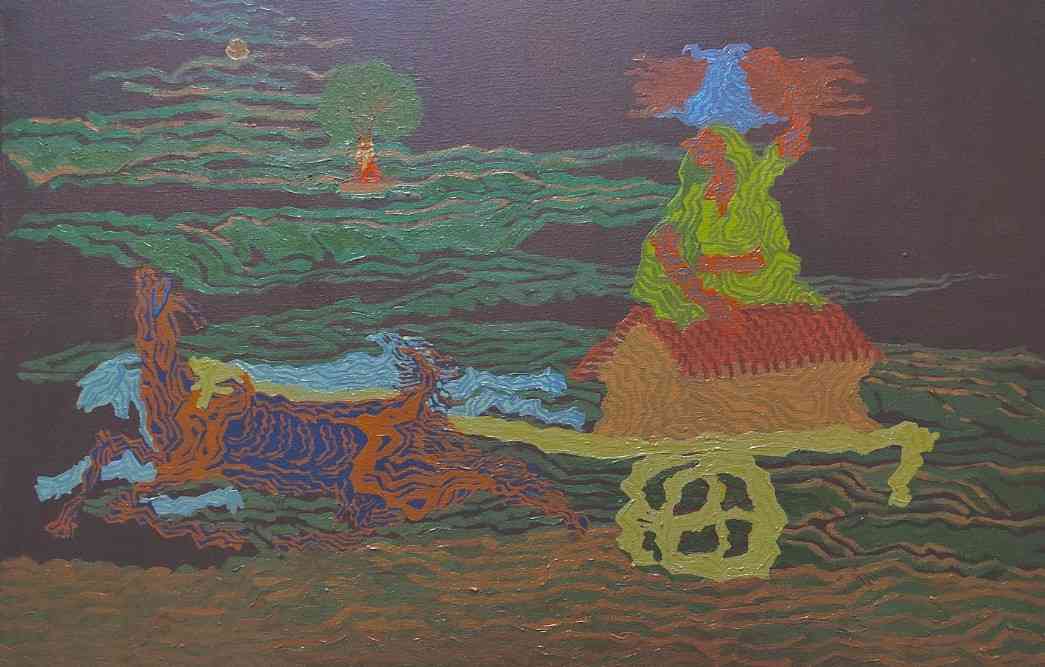
सफेद-पीला बकरी (White-Yellow Goat), Acrylic on canvas, 23 x 16 in (right), 2023
सफेद-पीला बकरी (White-Yellow Goat), Acrylic on canvas, 23 x 16 in (right), 2023
The title Maatima Sona Heyrai Gayo (Gold Lost in Clay) emerges from this tension. Clay is both the material ground of rural existence and a metaphor for the seemingly ordinary. It is soil, mud, earth—the substance from which agricultural life, habitation, labour, and memory emerge. Gold, by contrast, invokes value, aspiration, prosperity, and the promise of something better. Yet in the movement from village to city, from agrarian life to industrial economies, what is considered valuable often changes. The knowledge held in a field may become less visible than the infrastructure built upon it; a community’s collective memory may appear less significant than the promise of urban progress. What was once understood through familiarity, use, and inheritance becomes increasingly difficult to recognise as a form of wealth.
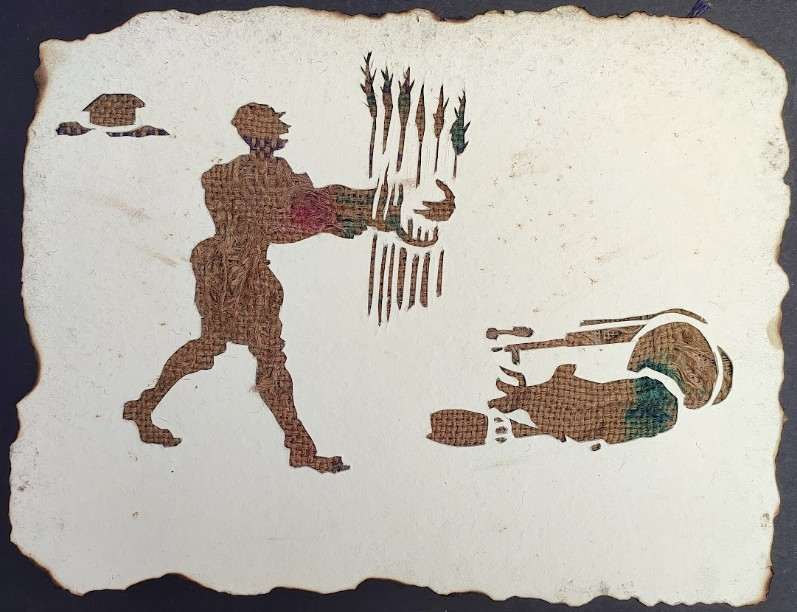
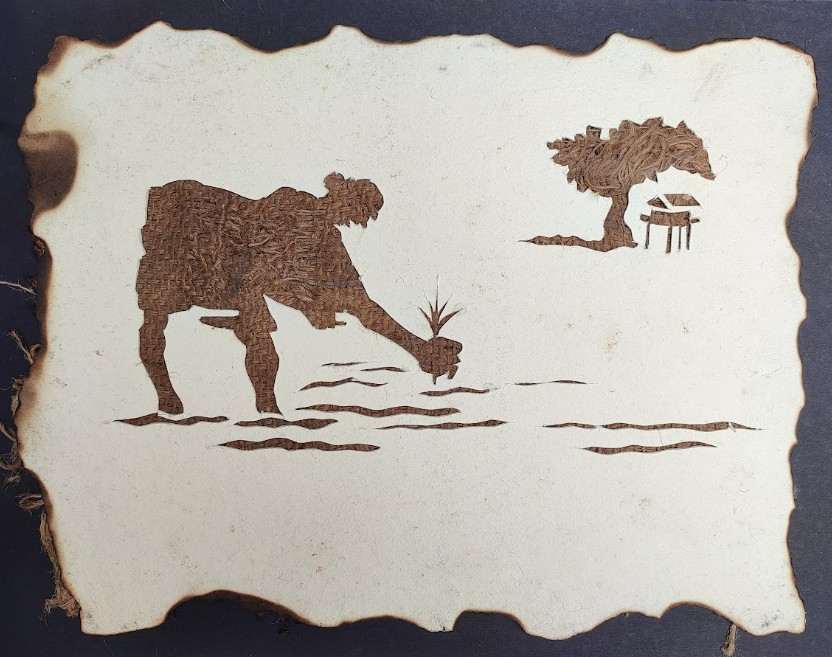
Village Memories, De-collage with paper, 19 x 15 in, 2022
“The rapid expansion of cities, industrialisation, migration, and modernisation have transformed rural landscapes across India. Villages are not disappearing in a simple or uniform sense; rather, their identities, relationships, and ways of living are being continuously reorganised.” - Chandan Singh
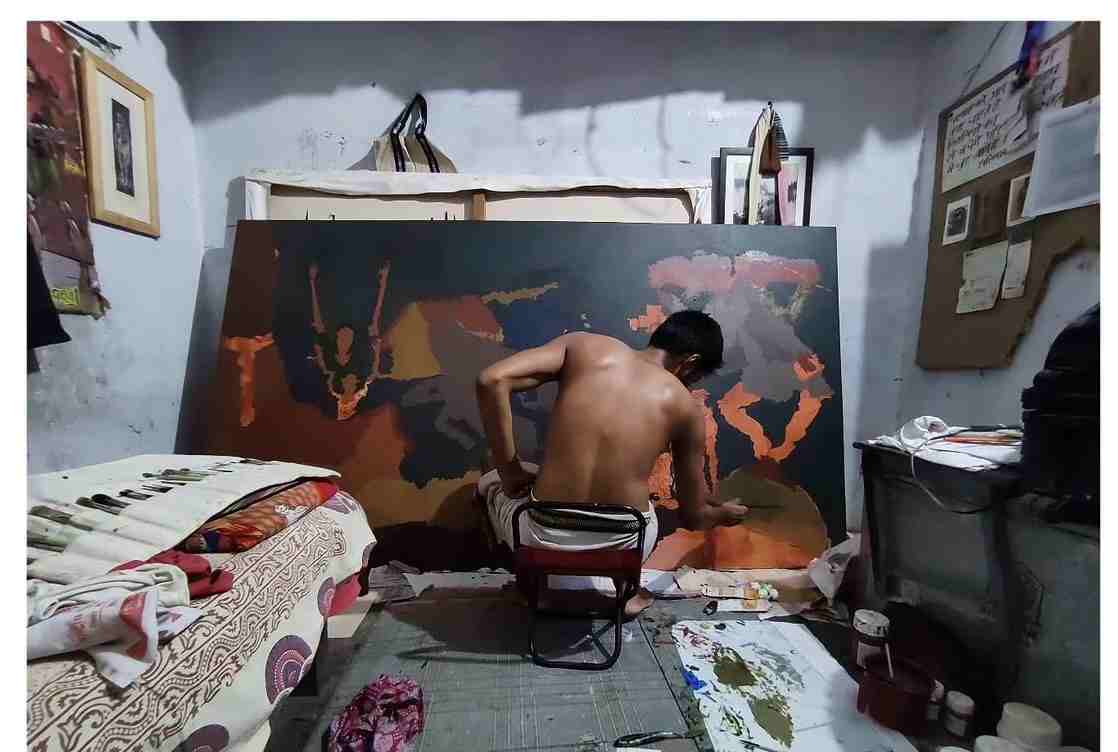
In his paintings, rice and wheat fields, cattle, farmers, husk, jute, tools, and fragments of rural life appear as more than visual motifs. They become carriers of inherited knowledge and lived experience. They hold the traces of agricultural labour, domestic rhythms, family histories, songs, folktales, and stories passed down by grandmothers and sisters. The village, in Singh’s practice, begins to resemble a collective body—one with which he shares an intimate relationship, even as that body is continually altered by forces beyond itself. Singh paints from within this uncertainty. His village is therefore not a place frozen in nostalgia. It contains joy and hardship, celebration and tragedy, attachment and departure. His farmers are not merely symbols of rural endurance, nor are his fields picturesque representations of an idyllic countryside. Instead, they belong to a lived world where labour can be exhausting, kinship can be sustaining, migration can be necessary, and belonging can be complicated. His paintings listen to these contradictions.
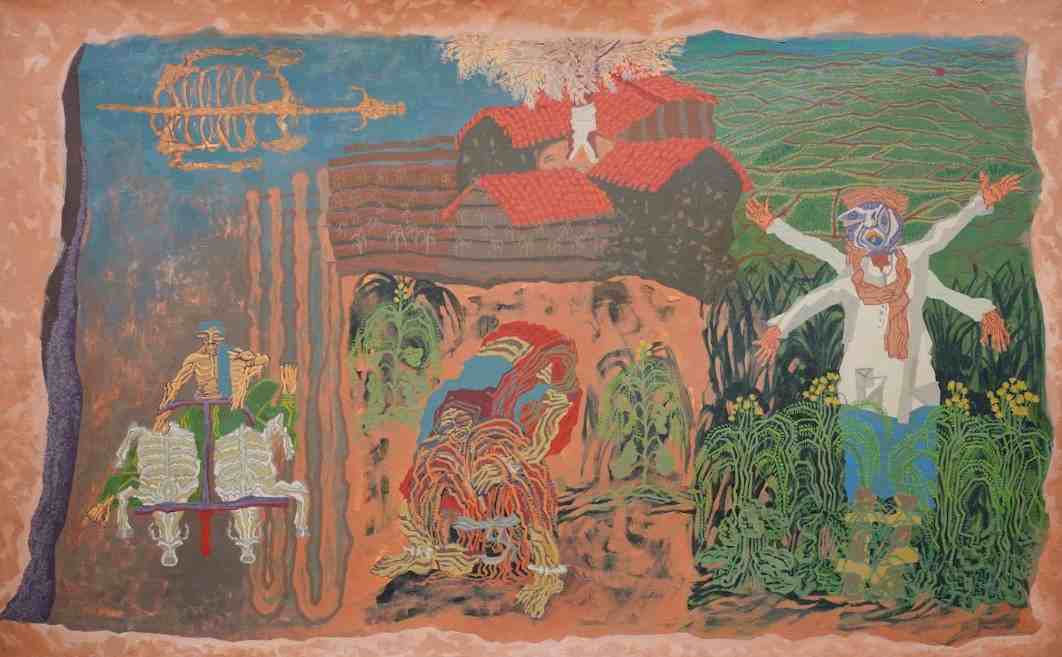
From Brown to Green, Acrylic on canvas, 60 x 36 in, 2024 (left)
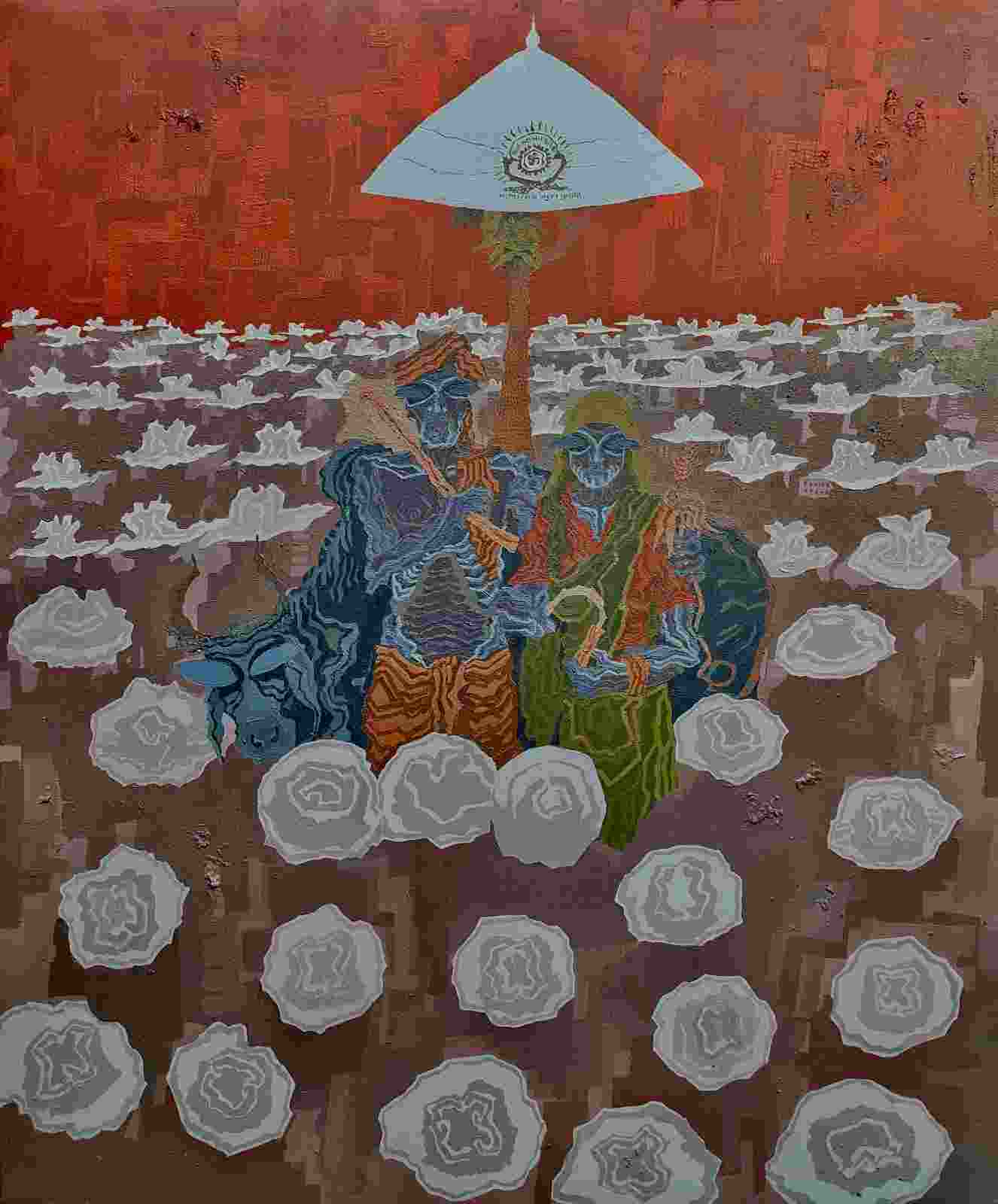
येहम कहााँपूछ गए? (Where have we reached?), Acrylic on canvas, 45.6 x 54 in, 2023 (right)
येहम कहााँपूछ गए? (Where have we reached?), Acrylic on canvas, 45.6 x 54 in, 2023 (right)
माटी मा सोना हेराइ गओ thus becomes less a lament for what has been lost than an attempt to recognise what continues to exist beneath the surface. The exhibition asks us to look again at the seemingly ordinary—the soil beneath our feet, the field at the edge of a settlement, the animal beside a farmer, the husk left after harvest, the stories carried through generations. These are forms of wealth that rarely enter conventional economies of value, yet they sustain ways of living, remembering, and belonging. Perhaps the gold was never separate from the clay. Perhaps it was always there, embedded within it—visible only to those who know how to look.
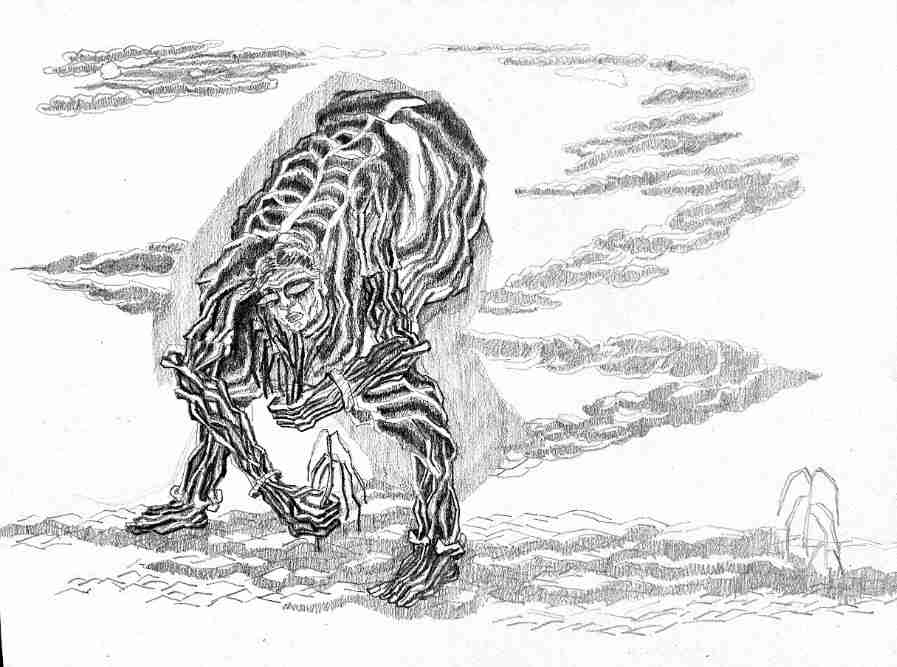
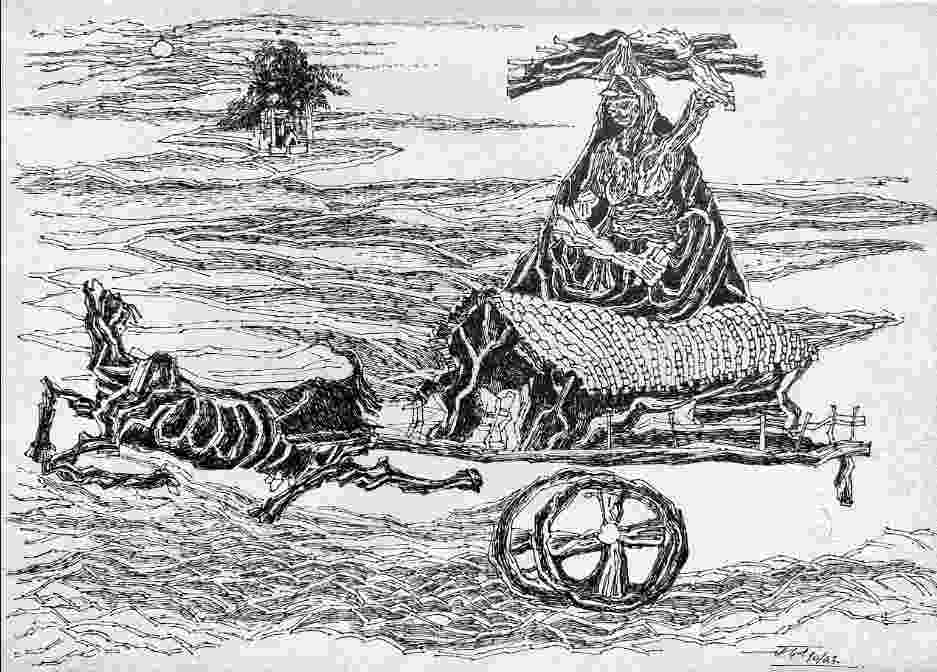
Untitled, Drawing on paper, 10.7 × 14.2 inch, 2024 (left)
ग्राम अभिव्यक्ति-1 (Gram expressions) Drawing on paper, 10.7 × 14.2 inch, 2023 (right)
ग्राम अभिव्यक्ति-1 (Gram expressions) Drawing on paper, 10.7 × 14.2 inch, 2023 (right)
“Agricultural practices change. Younger generations migrate. Traditional forms of knowledge become fragmented. The relationship between land and livelihood shifts. Objects once embedded in everyday life become remnants, memories, or museum-like traces. What remains is neither entirely the old nor entirely the new, but an uncertain space between the two.” - Chandan Singh
×
![Artwork enlarged view]()
Chandan Singh (b. 2000, Bundelkhand) is a painter currently based in Uttar Pradesh, India. He earned his Bachelor’s degree in Fine Arts (2021), followed by a Master’s degree in Fine Arts (2023) in painting from Banaras Hindu University, Uttar Pradesh.
Click here to explore more works by Chandan Singh.
Click here to explore more works by Chandan Singh.
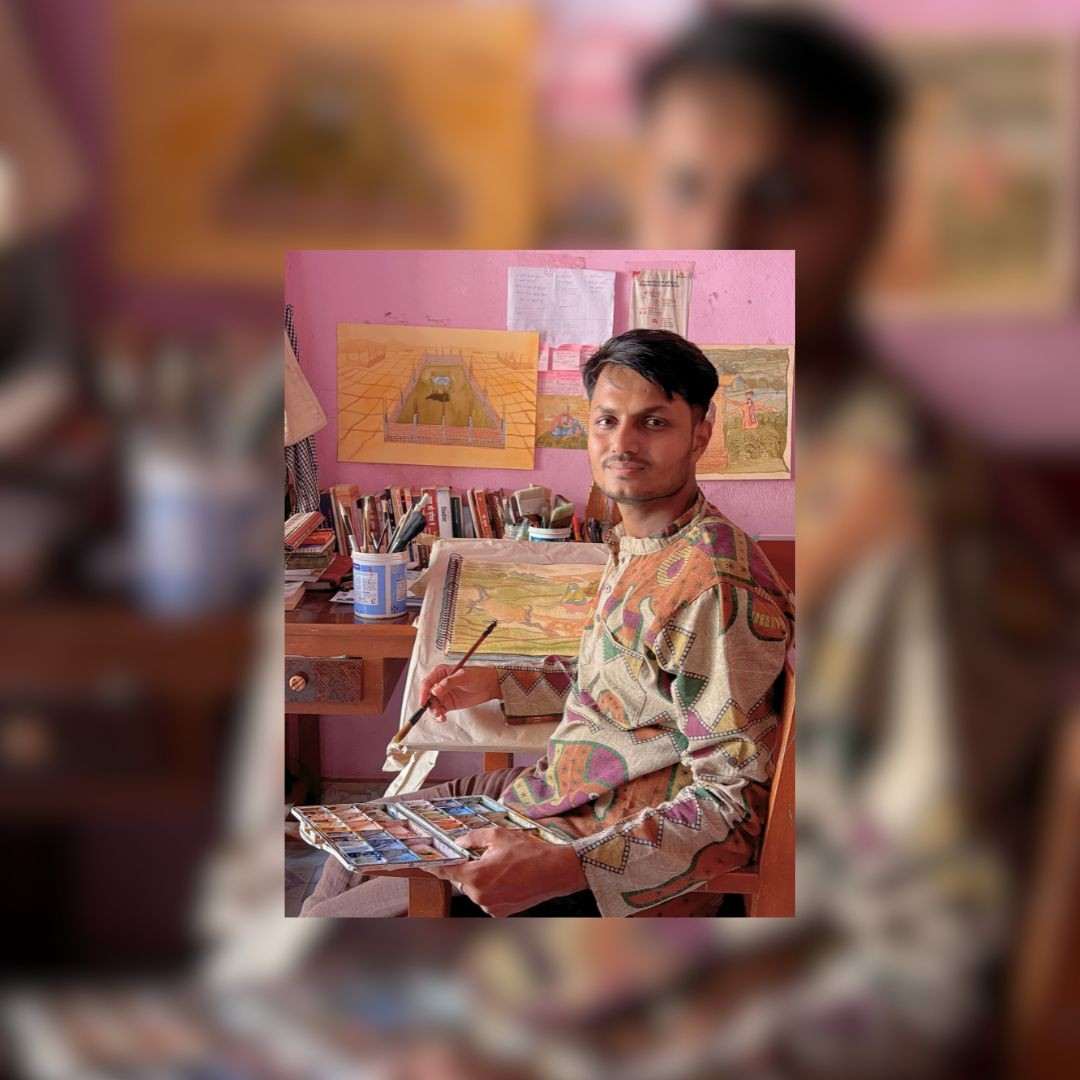
Image & Video Courtesy: Artist
Curatorial Advisor: Davangi Pathak
Exhibtion supported by State Lalit Kala Akademi, Lucknow, Uttar Pradesh.
Curatorial Advisor: Davangi Pathak
Exhibtion supported by State Lalit Kala Akademi, Lucknow, Uttar Pradesh.